CBD Marketing: The Complete Guide To Growing A Compliant Brand
On this page · 33 sections
- CBD Marketing Regulations: What Brands Need To Know
- 1. Federal Regulations and FDA Guidelines
- 2. State-Specific CBD Regulations
- 3. Hemp-Derived vs. Marijuana-Derived CBD
- 4. CBD Advertising Restrictions Across Marketing Platforms
- Key Components Of An Effective CBD Marketing Strategy
- 1. Brand Strategy And Positioning
- 2. Regulatory Compliance Framework
- 3. Digital Marketing Strategy
- 4. CBD Ecommerce, Retail And Distribution Strategy
- How To Measure The Success Of Your CBD Marketing Efforts
- 1. Set Clear Goals And Performance Benchmarks
- 2. Track The KPIs That Matter
- 3. Understand Which Channels Contribute To Results
- 4. Look Beyond The Numbers
- 6 Common CBD Marketing Mistakes To Avoid
- 1. Prioritizing Conversions Over Compliance
- 2. Relying On Generic Brand Messaging
- 3. Overlooking The Consumer Knowledge Gap
- 4. Relying Too Heavily On One Marketing Channel
- 5. Focusing Only On Customer Acquisition
- 6. Misaligning Pricing With Brand Positioning
- Grow Your CBD Brand With The Right Marketing Partner
- Frequently Asked Questions
- 1. What is CBD marketing?
- 2. Who can market CBD products?
- 3. Can CBD brands use affiliate marketing?
- 4. What should you look for in CBD marketing companies?
- 5. How long does CBD SEO take to show results?
- 6. How can CBD brands improve their visibility in AI search?
- 7. Can CBD businesses use customer-generated content for marketing?
- 8. What is the difference between CBD marketing and CBD branding?
- 9. Do CBD businesses require a specialized marketing agency?
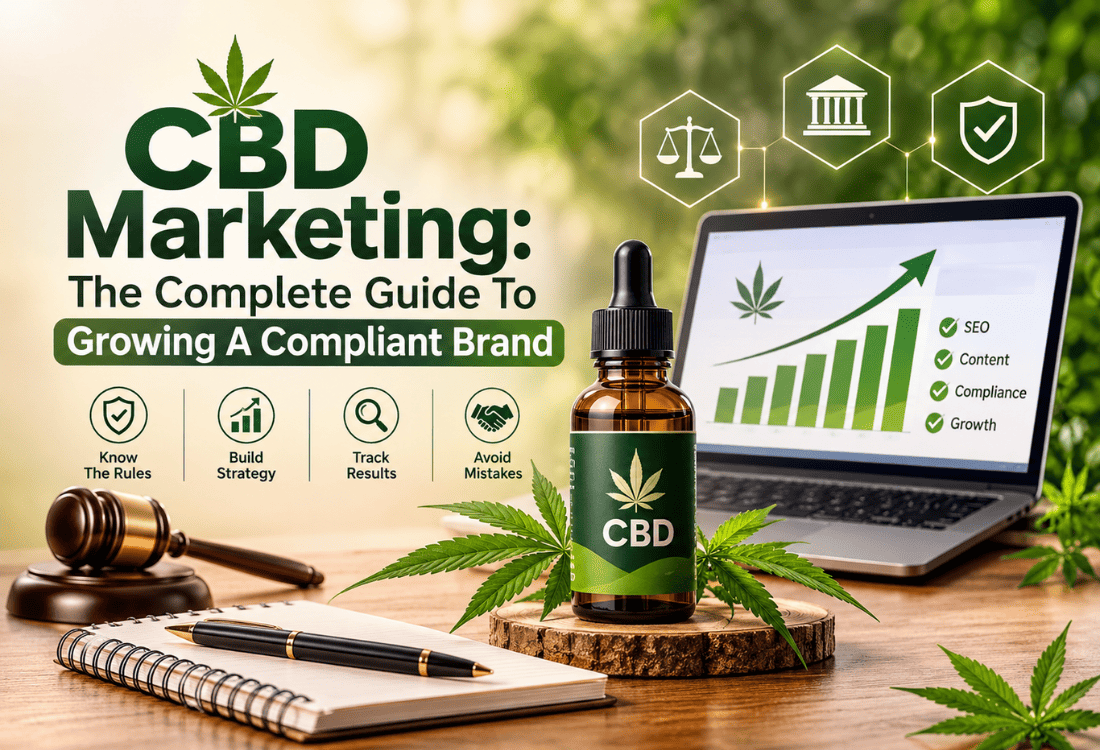
CBD marketing is unlike traditional marketing. While the industry presents significant growth opportunities, building a compliant CBD brand requires navigating strict advertising policies, evolving regulations, and limitations on product claims.
According to Grand View Research, the U.S. CBD market was valued at $6.8 billion in 2024 and is projected to reach $14.76 billion by 2030. Capturing a share of this growing market requires a strategic approach built on consumer education, product transparency, organic visibility, and regulatory compliance.
From CBD SEO and content marketing to CBD ecommerce optimization and brand positioning, this comprehensive guide outlines the strategies, challenges, and best practices for building a competitive, compliant, and sustainable CBD business.
Read on to discover how to position your CBD brand for sustainable growth in an increasingly competitive market.
CBD Marketing Strategy: Where To Focus Your Efforts
Business Objective
Marketing Approach
Key Performance Indicator
Increase Brand Awareness
Digital PR and brand partnerships
Brand mentions and reach
Improve Search Visibility
CBD SEO and content marketing
Organic traffic and keyword rankings
Establish Brand Authority
Expert-led educational content
Relevant backlinks and citations
Improve Ecommerce Performance
Website and conversion optimization
Conversion rate
Strengthen Customer Retention
Permission-based email marketing
Returning customer rate
Maintain Regulatory Compliance
Regular content and advertising audits
Compliance issues identified and resolved
CBD Marketing Regulations: What Brands Need To Know
Before launching a CBD marketing campaign, businesses must understand three levels of compliance: federal laws, state-specific regulations, and individual marketing platform policies. These determine which products you can promote, what claims you can make, and where you can advertise.
1. Federal Regulations and FDA Guidelines
The FDA regulates CBD products based on their intended purpose, formulation, and marketing claims. For CBD businesses, the following restrictions are particularly important:
Dietary Supplements: CBD cannot lawfully be marketed as a dietary supplement under the current federal framework.
Food and Beverages: Federal law prohibits introducing foods with added CBD into interstate commerce.
Medical Claims: Brands cannot market unapproved CBD products as treatments for diseases or medical conditions.
Cosmetic Products: CBD cosmetics must comply with applicable cosmetic regulations and must not make unauthorized drug claims.
Advertising Claims: Marketing communications must be truthful, non-misleading, and adequately substantiated.
2. State-Specific CBD Regulations
Federal compliance alone does not establish whether a CBD product can be marketed nationwide. Individual states impose additional requirements that can directly affect marketing and distribution decisions.
These may include:
Permitted CBD product categories
Minimum age restrictions
Product labeling and packaging requirements
Third-party laboratory testing
Business licensing and product registration
Advertising and sales restrictions
For businesses operating a CBD ecommerce website, understanding these differences is particularly important when determining geographical availability and shipping eligibility.
3. Hemp-Derived vs. Marijuana-Derived CBD
The source, chemical composition, and formulation of CBD products influence their regulatory classification and marketing eligibility.
Regulatory Aspect
Marijuana-Derived CBD
Source
Cannabis plants meeting the federal definition of hemp
Cannabis plants outside the federal definition of hemp
Federal Status
Subject to federal hemp and FDA regulations
Subject to federal controlled substance regulations
Advertising Eligibility
Limited to eligible products and platforms
Generally subject to stricter advertising restrictions
Sales and Distribution
Subject to product-specific federal and state laws
Subject to applicable cannabis licensing and distribution laws
Important Regulatory Update: Under the revised federal definition of hemp, finished hemp-derived products will be subject to a combined limit of 0.4 mg of total THC and certain related cannabinoids per container starting December 11, 2026. CBD businesses must review their product formulations and marketing eligibility accordingly.
4. CBD Advertising Restrictions Across Marketing Platforms
Even when a CBD product meets applicable legal requirements, it does not automatically qualify for advertising on mainstream digital platforms.
For example, Google Ads permits certain topical hemp-derived CBD products subject to certification, product eligibility, and geographical restrictions. Other platforms enforce their own advertising and content policies.
Before launching any campaign, review the following:
Permitted product categories
Advertiser certification requirements
Geographical and audience restrictions
Advertising copy and creative guidelines
Landing page compliance
Platform approval does not replace legal compliance. Both requirements must be satisfied before launching a campaign.
Now that we've covered the rules, let's look at what goes into building an effective CBD marketing strategy.
Key Components Of An Effective CBD Marketing Strategy
A great marketing campaign can only do so much if your brand lacks direction. From defining what makes your CBD business stand out to choosing the right marketing and distribution channels, these four components form the foundation of an effective CBD marketing strategy.
1. Brand Strategy And Positioning
What gives customers a reason to recognize and trust your brand? The answer should go beyond product quality and competitive pricing.
Know Your Audience: Understand who your customers are, what questions they have about CBD, and what influences their purchasing decisions.
Define Your Competitive Edge: Identify what sets your business apart, whether it's hemp sourcing, extraction methods, product formulation, or manufacturing standards.
Build a Recognizable Identity: Keep your packaging, website design, brand voice, and messaging consistent across customer touchpoints.
Back Your Brand With Evidence: Make third-party lab reports, ingredient information, and sourcing details easy to access.
2. Regulatory Compliance Framework
Knowing the regulations is one thing; putting them into practice across everyday marketing activities is another. An internal compliance framework helps businesses manage this process systematically.
Set Clear Messaging Guidelines: Maintain a document outlining approved product claims, promotional phrases, and terminology.
Assign Compliance Responsibilities: Designate team members to review and approve marketing materials.
Create an Approval Process: Review website copy, advertisements, emails, and influencer content before publication.
Conduct Regular Compliance Audits: Review existing marketing materials and update outdated information as regulations change.
Monitor Affiliate Marketing Practices: Ensure affiliate partners disclose their commercial relationships, follow approved messaging, and avoid unauthorized health or product claims.
3. Digital Marketing Strategy
Each digital marketing channel serves a different purpose. Define what you want to achieve through each channel before allocating your marketing budget and resources.
Digital Marketing Channel
Primary Role
CBD SEO
Improve visibility for relevant search queries.
Content Marketing
Answer consumer questions and establish subject matter authority.
Email Marketing
Maintain direct communication with consenting subscribers.
Programmatic Advertising
Access eligible advertising networks and placements.
Influencer Marketing
Build brand awareness through transparent, compliant partnerships.
Work with eligible publishers and partners through commission-based referral programs.
4. CBD Ecommerce, Retail And Distribution Strategy
Your marketing requirements will differ depending on whether you operate through a CBD ecommerce website, physical retail stores, wholesale distribution, or a combination of these channels.
Direct-to-Consumer (D2C): Maintain accurate product pages, transparent business policies, and a reliable online shopping experience.
Retailer Education: Provide retail partners with product specifications, ingredient information, and laboratory documentation.
Trade Marketing: Create product catalogs, wholesale presentations, and brand materials for distributors and retail partners.
In-Store Marketing: Use informative shelf displays, product brochures, and QR codes linking to relevant product documentation.
Sales Enablement: Equip sales representatives with approved messaging, product comparison sheets, and answers to frequently asked customer questions.
Now that you have a marketing strategy in place, how do you know if it's working?
How To Measure The Success Of Your CBD Marketing Efforts
Higher website traffic, better keyword rankings, and more impressions are all positive signs. But are these numbers translating into actual business growth? Measuring CBD marketing success comes down to understanding what your marketing investment delivers in terms of revenue, customer retention, and brand credibility.
1. Set Clear Goals And Performance Benchmarks
Without a clear starting point, it's difficult to determine how much progress you've made.
Define Your Objectives: Determine whether your campaign focuses on brand awareness, lead generation, sales, or customer retention.
Record Existing Performance: Document your current website traffic, conversion rates, revenue, and customer acquisition costs.
Set a Review Period: Evaluate performance over 30, 90, or 120 days, depending on your marketing objectives and customer buying cycle.
2. Track The KPIs That Matter
Not every metric carries the same weight. A growing social media following, for example, doesn't necessarily translate into higher revenue. Focus on metrics that help you understand how your CBD business is performing at different stages of the customer journey.
Performance Area
Key Metrics To Track
Brand Visibility
Impressions, organic traffic, share of voice, and brand mentions
Customer Engagement
Click-through rate (CTR), email sign-ups, and content engagement
Sales Performance
Conversion rate, revenue, and average order value (AOV)
Marketing Profitability
Customer acquisition cost (CAC), return on ad spend (ROAS), and marketing ROI
Customer Retention
Repeat purchase rate, customer lifetime value (CLV), and customer churn
Brand Credibility
Customer reviews, media coverage, and customer satisfaction scores
Affiliate Marketing Performance
Referral traffic, attributed conversions, affiliate commissions, and revenue.
3. Understand Which Channels Contribute To Results
A customer might discover your CBD brand through organic search, read an educational blog post, and later return through an email. Giving all the credit to the last channel can leave you with an incomplete picture.
Use analytics tools, UTM tracking, campaign-specific landing pages, and attribution reports to understand how different marketing channels contribute to business outcomes.
4. Look Beyond The Numbers
Analytics tell you what is happening, but they don't always tell you why. Customer surveys, product reviews, sales inquiries, and customer support conversations can reveal gaps that performance reports might miss.
Use these insights alongside A/B testing to identify what's working, what requires improvement, and where your marketing resources are best allocated.
Tracking performance also helps uncover mistakes that could be holding your CBD business back.
6 Common CBD Marketing Mistakes To Avoid
Even a well-planned marketing strategy can underperform when businesses overlook certain details. Here are six common mistakes that can undermine your marketing efforts, waste resources, and affect long-term brand credibility.
1. Prioritizing Conversions Over Compliance
Making bold health claims might get your brand more attention, but is it worth the regulatory risk? Even a customer testimonial can create compliance issues if it contains unauthorized medical claims. Be mindful of what goes into your website copy, advertisements, emails, and promotional materials.
2. Relying On Generic Brand Messaging
If every CBD brand claims to offer ‘premium quality’ and ‘natural ingredients,’ what makes yours different? Give customers something specific to associate with your brand, whether it's your hemp sourcing, extraction process, product formulation, or manufacturing standards.
3. Overlooking The Consumer Knowledge Gap
Don't assume that everyone visiting your website knows the difference between CBD isolate, broad-spectrum, and full-spectrum CBD. Look at the questions your customers frequently ask and create content that answers them in simple, easy-to-understand language.
4. Relying Too Heavily On One Marketing Channel
What happens if your primary advertising platform changes its CBD policies or your organic traffic suddenly drops? Relying on a single channel puts your business in a vulnerable position. Spread your marketing efforts across multiple eligible channels instead of putting your entire budget into one.
5. Focusing Only On Customer Acquisition
Getting new customers is important, but what happens after their first purchase? If you're only tracking new customers and sales, you're missing part of the picture. Pay attention to repeat purchases, customer feedback, and customer lifetime value (CLV) to better understand your business performance.
6. Misaligning Pricing With Brand Positioning
If you're positioning your CBD brand as premium, your pricing and product presentation should reflect that. Constant discounts can undermine that perception. Similarly, charging more than your competitors without a clear reason makes it difficult for customers to understand what they're paying for.
Navigating these challenges requires more than general marketing expertise. Working with a team that understands the CBD industry, its regulations, and its unique marketing challenges can make all the difference.
Grow Your CBD Brand With The Right Marketing Partner
Growing a CBD business isn't about being present on every marketing channel or spending more than your competitors. It's about understanding your market, making informed decisions, and investing in strategies that deliver measurable results without compromising compliance.
At Total Botanical Solutions, we specialize in compliance-first marketing for CBD and botanical brands. From CBD SEO and AI search visibility to affiliate marketing, email campaigns, and ecommerce optimization, we bring industry-specific expertise and services to every stage of your marketing journey.
Ready to take your CBD marketing strategy forward? Connect with our team and let's build a growth strategy tailored to your business.
Note: With years of experience in CBD marketing, we've helped brands overcome industry-specific challenges and achieve measurable growth. Explore our case studies to see how our expertise translates into real business results.
Frequently Asked Questions
1. What is CBD marketing?
CBD marketing refers to the strategies used to promote cannabidiol (CBD) products and brands while complying with legal and platform-specific restrictions. It includes SEO, content marketing, email marketing, brand partnerships, and consumer education to build awareness and support business growth
2. Who can market CBD products?
Businesses and marketers can promote legally marketable CBD products, provided they comply with applicable federal and state laws, FDA and FTC guidelines, and platform-specific policies. All marketing claims must be truthful, non-misleading, and adequately substantiated.
3. Can CBD brands use affiliate marketing?
Yes, subject to applicable laws and affiliate network policies. CBD businesses must ensure that their affiliate partners disclose commercial relationships and follow relevant advertising and product claim restrictions.
4. What should you look for in CBD marketing companies?
Look for CBD marketing companies with proven experience in regulated industries, a strong understanding of advertising restrictions, expertise in CBD SEO and ecommerce, transparent reporting, and a compliance-first approach to brand growth.
5. How long does CBD SEO take to show results?
CBD SEO typically takes 3–6 months to show initial results and 6–12 months or longer to achieve significant ranking improvements and consistent organic traffic growth. Timelines depend on website authority, keyword competition, technical SEO, and content quality.
6. How can CBD brands improve their visibility in AI search?
CBD brands can improve AI search visibility by publishing clear, accurate content, making lab reports easy to access, earning mentions on trusted websites, and keeping product information up to date. Track brand mentions across ChatGPT, Gemini, Perplexity, and Google AI Overviews.
7. Can CBD businesses use customer-generated content for marketing?
Yes, but brands must review user-generated content before republishing it. Customer testimonials, videos, and reviews containing unauthorized medical claims can create compliance risks, even when the statements originate from customers.
8. What is the difference between CBD marketing and CBD branding?
CBD branding defines your business identity, positioning, and market perception. CBD marketing involves the strategies and channels used to communicate that identity and achieve business objectives.
9. Do CBD businesses require a specialized marketing agency?
Not necessarily, but specialized CBD marketing companies bring industry-specific knowledge of regulatory restrictions, advertising policies, ecommerce challenges, and compliant content development that general marketing agencies may lack.
Disclaimer: This article is for informational purposes only and does not constitute legal or regulatory advice. CBD laws, advertising restrictions, and platform policies may change. Businesses should verify current federal, state, and local regulations and consult qualified legal professionals before implementing any CBD marketing strategy.
Ready To Grow Your Botanical Brand?
A 30-minute strategy call with our team — no pitch, just honest diagnosis and a clear view of what's possible.