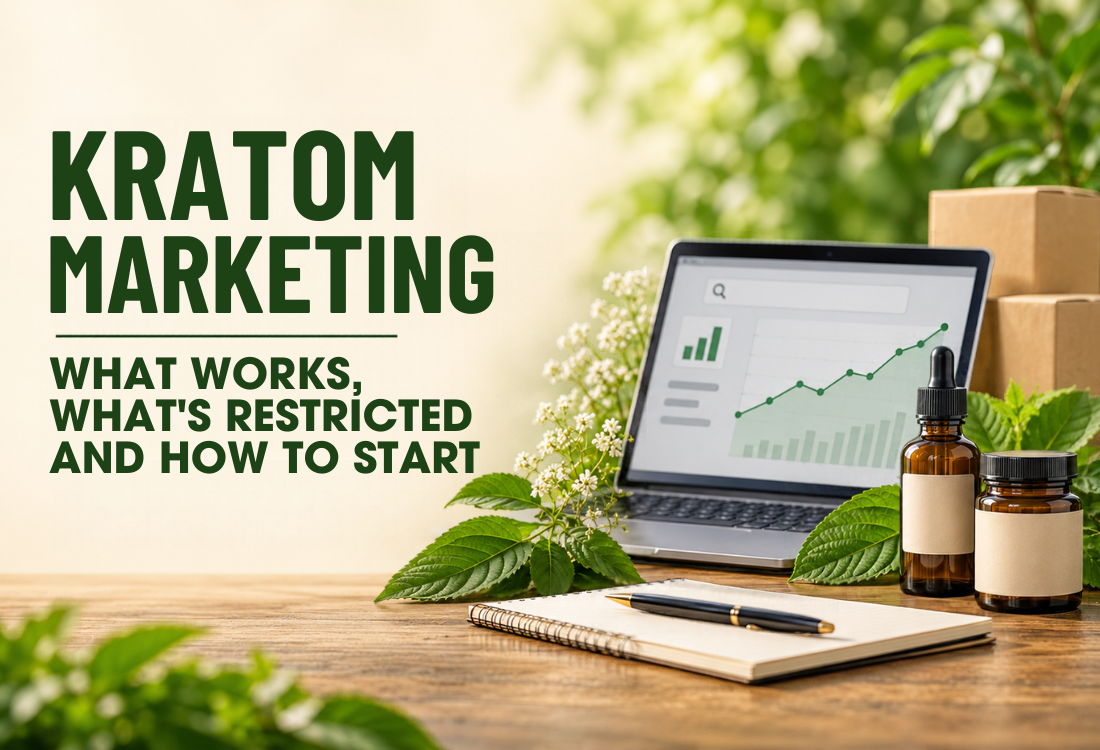
Kratom Marketing: What Works, What's Restricted And How To Start
On this page · 23 sections
- What Works In Kratom Marketing?
- Understanding The Kratom Market And Its Marketing Challenges
- Why Is Kratom Difficult To Market?
- Kratom Marketing Restrictions: What Businesses Need To Know
- FDA And FTC Marketing Guidelines
- Paid Advertising And Social Media Restrictions
- State Laws And Age-Related Restrictions
- How To Start With Kratom Marketing: A Step-By-Step Guide
- 1. Define Your Marketing Goals And Priorities
- 2. Build A Strong Digital Foundation
- 3. Establish Your Organic Search Presence
- 4. Establish Email And SMS Communication
- 5. Build Brand Credibility Through Community Engagement
- 6. Track Performance And Refine Your Strategy
- Final Thoughts
- Frequently Asked Questions
- 1. What is Kratom marketing?
- 2. Can Kratom brands use influencer marketing?
- 3. Can Kratom businesses use affiliate marketing?
- 4. Is Kratom marketing different for B2B and B2C businesses?
- 5. Can customer testimonials create compliance issues for Kratom brands?
- 6. Can Kratom businesses appear in AI-generated search results?
- 7. Can Kratom brands outsource their digital marketing?
Kratom marketing involves building brand visibility, communicating product information, and establishing customer relationships while navigating strict advertising restrictions and evolving regulations. But unlike conventional marketing, getting your brand noticed in the Kratom industry isn't as simple as running a few Google or social media ads.
With limited paid advertising opportunities and growing public health scrutiny, businesses place greater emphasis on SEO, community engagement, consent-based email marketing, and transparent brand messaging.
So, where do you begin? In this guide, we'll break down what works in Kratom marketing, what's restricted, and how to get started with a responsible marketing strategy.
What Works In Kratom Marketing?
Kratom marketing differs from conventional digital marketing due to limited paid advertising opportunities. Businesses must carefully evaluate available communication channels, balancing brand visibility with regulatory and platform compliance.
Marketing Channel
Role In Kratom Marketing
SEO & Local Search
Supports organic visibility through accurate, relevant website content and business information.
Email Marketing
Facilitates consent-based customer communication and business updates.
Content Marketing
Provides factual, educational, and product-related information.
Community Engagement
Supports transparent communication and brand credibility within platform guidelines.
Retail Presence
Establishes a physical business presence where legally permitted.
Responsible Brand Messaging
Prioritizes accurate labeling, product transparency, and factual communication.
But why does Kratom require such a different approach to marketing? The answer lies in the industry's unique business landscape.
Understanding The Kratom Market And Its Marketing Challenges
The Kratom market has expanded beyond traditional powders and capsules to include gummies, extracts, shots, and ready-to-drink beverages. From manufacturers and wholesale distributors to e-commerce brands and physical retailers, businesses operate across both B2B and B2C segments. But as the Kratom industry evolves, so do the expectations around product quality, transparency, and responsible marketing.
Why Is Kratom Difficult To Market?
Running a Kratom business comes with challenges that go beyond conventional marketing. Some of the biggest ones include:
Limited Marketing Opportunities: Restrictions across mainstream marketing channels limit advertising options.
Payment Processing Challenges: Not all payment processors support Kratom businesses.
Public Perception: Public health concerns and negative media coverage can influence brand reputation.
Consumer Trust: Inconsistent product quality across the industry creates credibility challenges.
Regulatory Uncertainty: Changing laws can affect business operations and long-term planning.
Among these challenges, regulatory and advertising restrictions deserve particular attention.
Kratom Marketing Restrictions: What Businesses Need To Know
Can you legally advertise Kratom? Yes, but there are limitations. What you can advertise, where you can advertise, and the claims you can make depend on applicable laws, product classifications, and platform policies.
FDA And FTC Marketing Guidelines
Here's what businesses must keep in mind when communicating about Kratom products and their information:
FDA Regulations: The FDA maintains that Kratom cannot lawfully be marketed as a dietary supplement or added to conventional food.
Medical Claims: Brands must not make unapproved claims about treating, curing, or preventing diseases.
FTC Requirements: Advertising must be truthful, non-misleading, and adequately substantiated.
Disclaimers: Adding a disclaimer does not make a misleading or unlawful claim compliant.
For more information, refer to the FDA's position on Kratom and the FTC's Health Products Compliance Guidance.
Paid Advertising And Social Media Restrictions
Just because Kratom is legal in a particular state doesn't mean advertising platforms allow its promotion.
Marketing Platform
Restrictions
Google Ads
Prohibits advertising recreational drugs and certain unapproved substances.
Facebook and Instagram
Restrict advertising drugs and unsafe substances.
TikTok
Prohibits recreational drug advertising and restricts regulated products.
Email Marketing Platforms
Eligibility depends on the provider's acceptable use policy.
Google Business Profile
Restricts promotional content involving regulated goods.
Organic content is also subject to platform policies. Violations can lead to content removal, ad rejection, or account suspension.
State Laws And Age-Related Restrictions
Kratom regulations vary across the US. Businesses must consider:
State And Local Laws: Some jurisdictions prohibit Kratom, while others regulate its sale and distribution.
Age Requirements: Minimum purchase ages vary by jurisdiction.
Geographic Restrictions: Product availability and marketing activities must comply with applicable regional laws.
With these restrictions in mind, here's how to put together a responsible marketing strategy.
How To Start With Kratom Marketing: A Step-By-Step Guide
A strong Kratom marketing strategy starts with clear business objectives, the right digital infrastructure, and consistent brand communication. Here are six steps to get started.
1. Define Your Marketing Goals And Priorities
Start by identifying what you want to achieve. Your priorities will differ depending on whether you're a manufacturer, wholesale distributor, e-commerce brand, or physical retailer.
Set clear objectives, establish a realistic budget, and select marketing channels that align with your business model and applicable regulations.
2. Build A Strong Digital Foundation
Your website is the backbone of your digital presence. Focus on building a reliable, informative, and user-friendly website with:
Clear navigation and accurate product descriptions.
Accessible third-party lab reports.
Transparent shipping and return policies.
Compatible payment processors and digital tools.
When exploring Kratom marketing services, look for providers with experience in website optimization and regulated industries.
3. Establish Your Organic Search Presence
Having a website is one thing; making its information discoverable through search engines is another. This is where search engine optimization (SEO) comes into play.
Key areas to focus on include:
Technical SEO: Maintain a well-structured, fast-loading, and easily crawlable website.
Keyword Optimization: Incorporate relevant keywords naturally into website content.
Blog Content: Publish informative articles that address common industry and product-related questions.
On-Page SEO: Maintain descriptive title tags, clear headings, and relevant internal links.
Local SEO: Keep business listings, locations, and operating hours accurate for Kratom bars and physical retail stores.
4. Establish Email And SMS Communication
Email and SMS allow businesses to communicate directly with consenting subscribers. These channels can support educational newsletters, brand announcements, customer service, and important business updates.
Choose compatible service providers, obtain proper subscriber consent, and keep unsubscribe options clear.
5. Build Brand Credibility Through Community Engagement
Word-of-mouth plays an important role in shaping brand reputation. Respond to customer questions, encourage authentic feedback, and maintain transparent community interactions.
Third-party reviews and creator content must also follow applicable endorsement disclosure requirements, advertising regulations, and platform policies.
6. Track Performance And Refine Your Strategy
Marketing isn't a one-time effort. Regularly monitor organic traffic, keyword rankings, website engagement, and email performance to understand what's working and where improvements are required.
Whether you're managing marketing in-house or investing in Kratom digital marketing services, use data to guide your decisions and regularly review content for accuracy and compliance.
Note: Kratom laws and advertising policies continue to evolve. As you implement your marketing strategy, regularly review applicable regulations, platform policies, and product claims to ensure your marketing activities remain compliant.
Final Thoughts
Being present everywhere isn't necessarily the answer to Kratom marketing. What matters is knowing where to focus your resources, which activities deserve your attention, and when to rethink your approach.
Not every business requires a full-scale marketing plan from day one. Start with the essentials, assess your progress, and expand your efforts as your business evolves. At Total Botanical Solutions, we take this approach to digital marketing, recognizing that every business has different priorities, challenges, and goals. After all, a focused strategy with clear direction is far more valuable than trying to do everything at once.
Want to see how our approach translates into results? Explore Total Botanical Solutions' case studies to discover how we've helped Kratom businesses improve their digital presence and organic search performance.
Frequently Asked Questions
1. What is Kratom marketing?
Kratom marketing refers to the branding, promotional, and sales strategies used by businesses offering products derived from Mitragyna speciosa. It involves building brand visibility and communicating product information while navigating legal requirements and advertising platform restrictions.
2. Can Kratom brands use influencer marketing?
Influencer marketing is subject to platform policies and FTC endorsement guidelines. Any permitted collaboration must clearly disclose commercial relationships and avoid misleading statements or unapproved health claims.
3. Can Kratom businesses use affiliate marketing?
Yes, Kratom businesses can use affiliate marketing through partnerships with bloggers, review websites, and content creators, where permitted. However, affiliates must disclose commercial relationships, follow platform policies, and avoid misleading or unapproved health claims.
4. Is Kratom marketing different for B2B and B2C businesses?
Yes. B2B marketing centers on wholesale relationships, distribution, and commercial terms, while B2C communication focuses on product information, customer education, and retail experiences.
5. Can customer testimonials create compliance issues for Kratom brands?
Yes. Testimonials containing unapproved medical claims or misleading product statements can create regulatory concerns, even when they reflect a customer's personal experience.
6. Can Kratom businesses appear in AI-generated search results?
Yes, Kratom-related websites may appear in AI-generated search results. However, inclusion depends on the search platform's policies, source selection, and information relevance. Visibility is not guaranteed.
7. Can Kratom brands outsource their digital marketing?
Yes. Businesses can outsource activities such as website management, content development, analytics, and SEO. However, outsourcing does not remove their responsibility for regulatory compliance.
Disclaimer: This blog post is for informational purposes only and does not constitute legal or regulatory advice. Kratom laws and advertising policies are subject to change. Businesses should verify applicable regulations and platform guidelines before implementing any marketing strategy.
Ready To Grow Your Botanical Brand?
A 30-minute strategy call with our team — no pitch, just honest diagnosis and a clear view of what's possible.